Quick Diffraction Test
A recent thread over on birdphotographers.net on diffraction prompted me to do this quick test.
The images were taken with a Canon EOS 40D, with an EF 100-400mm f/4.5-5.6L IS USM @ 100mm, locked off on a tripod. Exposure was ISO 100, 1/250th @ f/5.6, f/8, f/11, f/16, f/22 and f/32. The target was lit with a Canon 580Ex II flash on camera. All frames were shot using one shot AF, with a 2 second timer and mirror lock up. No exposure or flash exposure compensation was used. The images were processed in Adobe Lightroom 2.3 RC, with the following settings:
|
|
The left column are 100% crops of bar code on the receipt in the center of the frame. The column on the left is the image the crop was made from, re-sized to fit in a 1000px by 800px box. Both series were exported with standard output sharpening targeted for the screen. Both columns are ordered by increasing whole f-stops from f/5.6 to f/32.
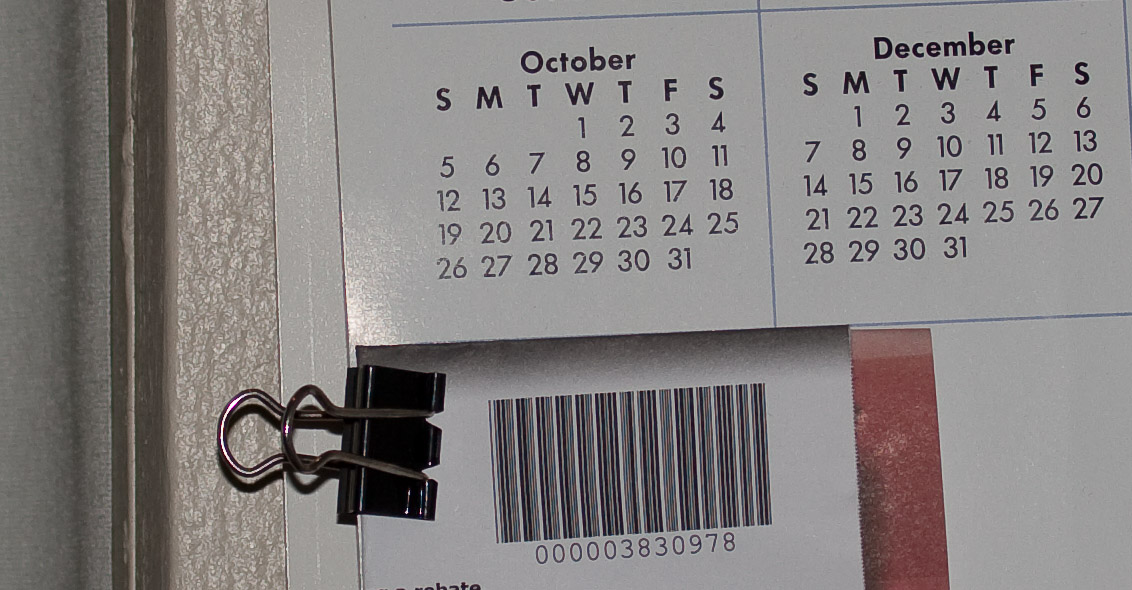

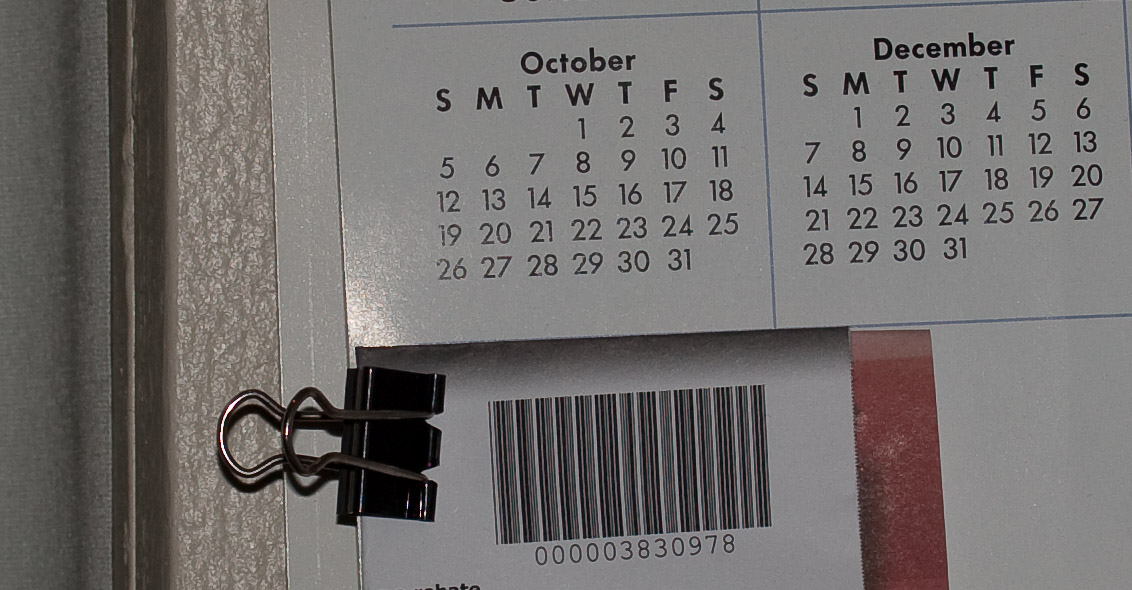
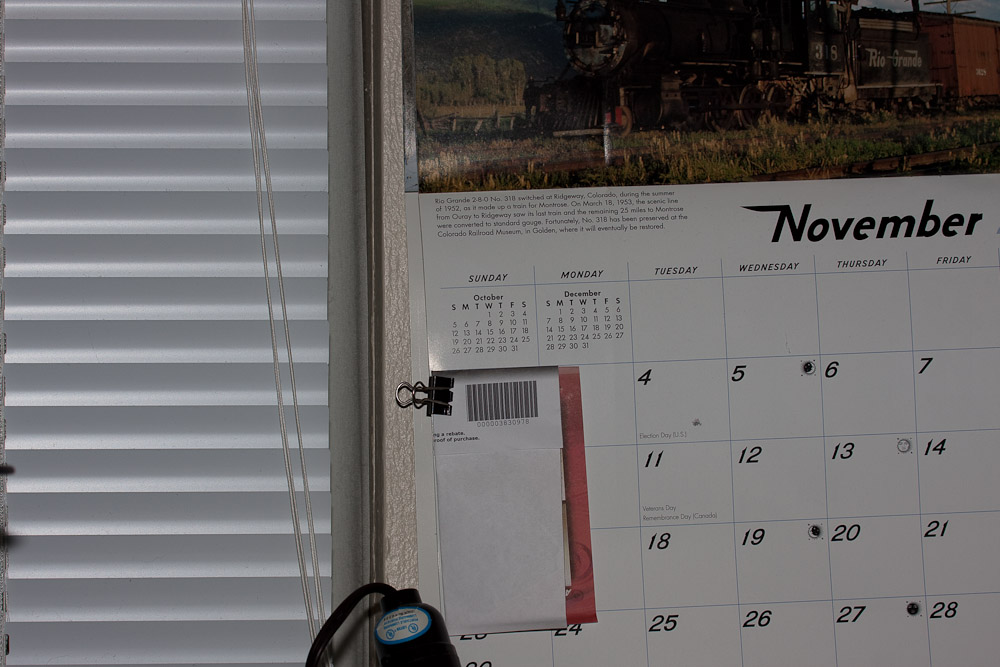
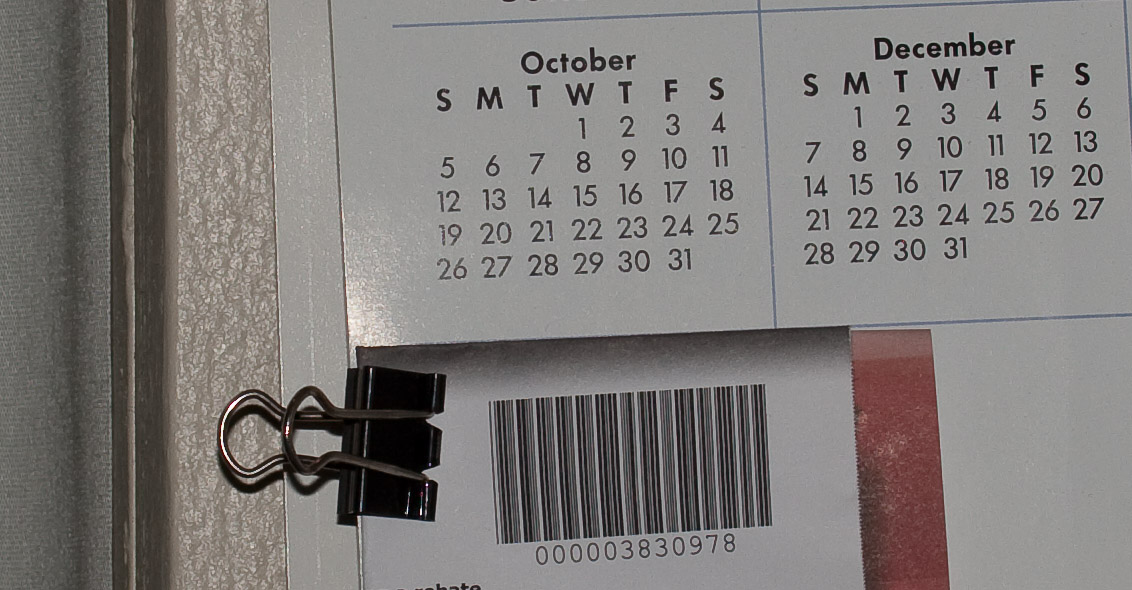
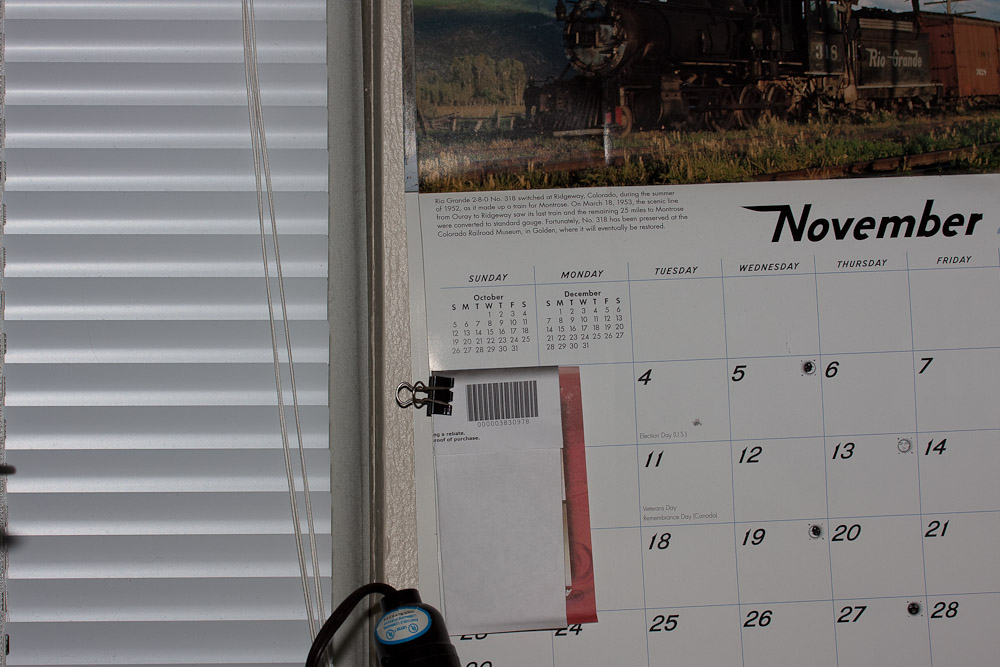


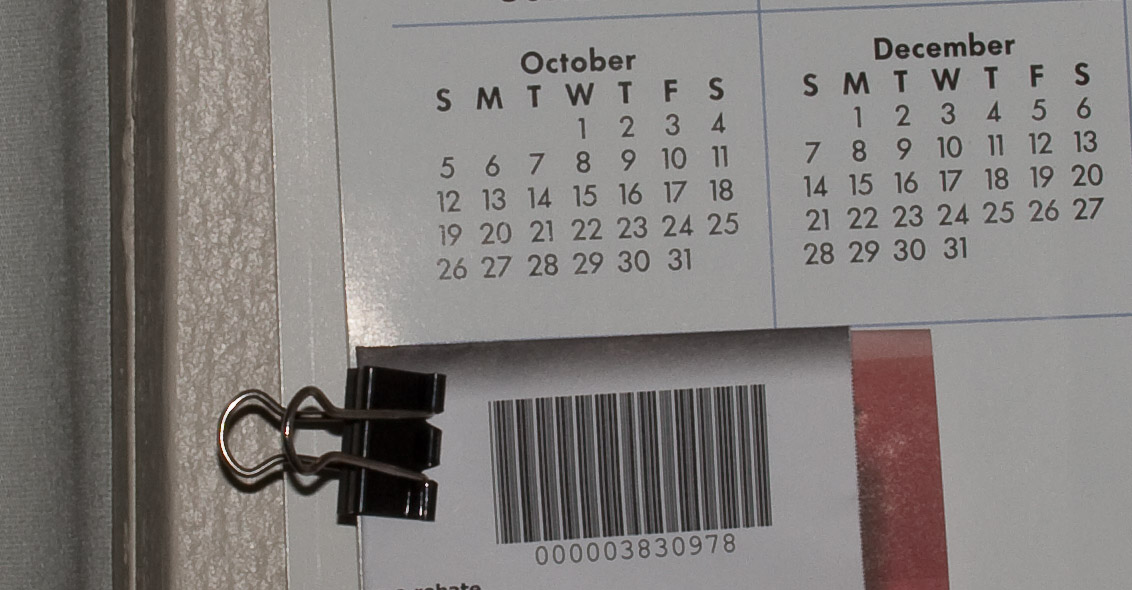
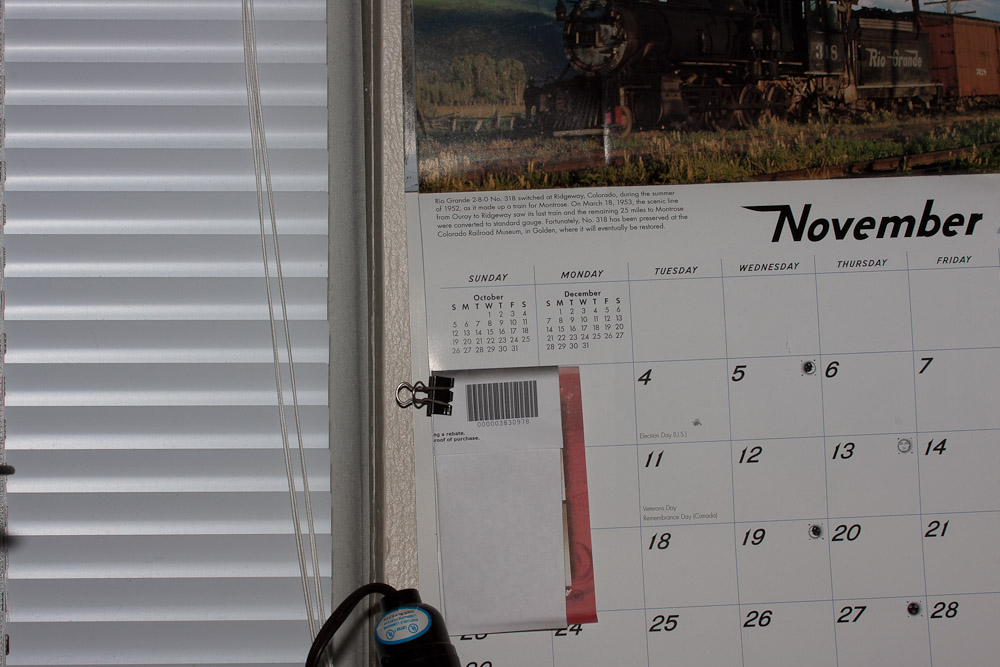
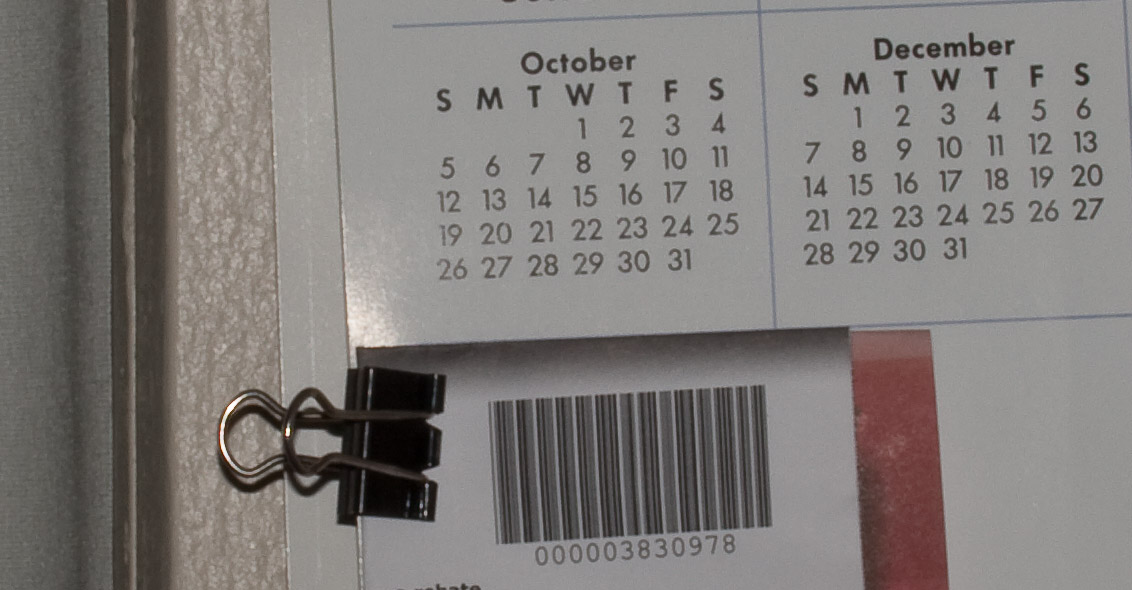
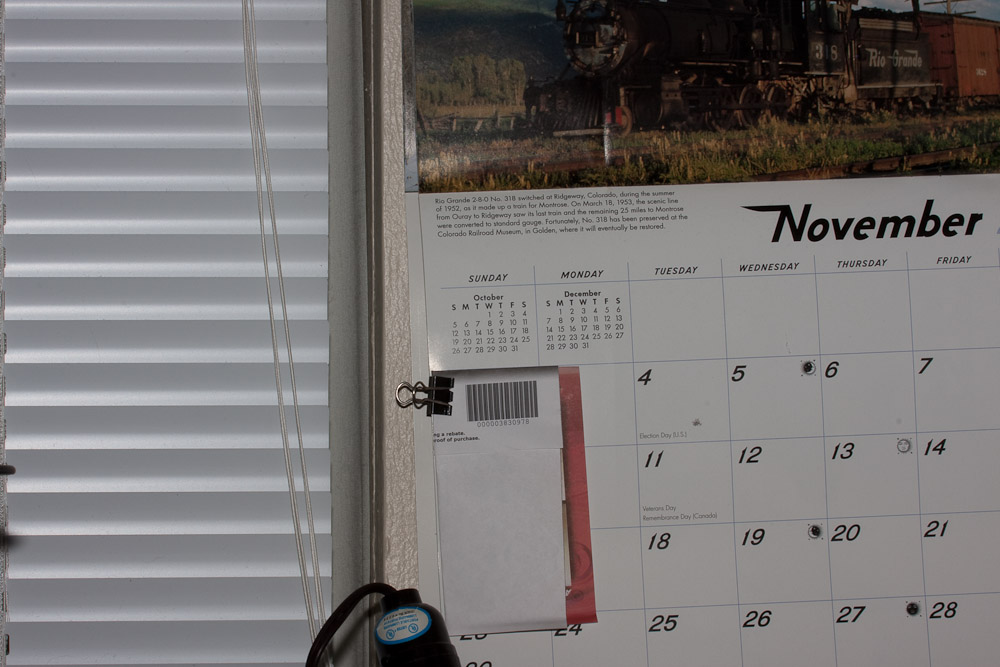
To my eye, I don’t see any appreciable difference in the actual images. Yes there clearly is an increase in sharpness between f/5.6 and f/8 and it decreases from there out to f/32. At least in the 100% crops. In the down sampled images as would be presented on the web, the differences aren’t very noticeable until you get to f/32 which is a little softer than the rest.
Granted this isn’t a very scientific test, and very little processing was done to these images outside of my default settings in Lightroom (and a boost in sharpening). I personally don’t see any significan reason to avoid shooting at smaller aperture when DoF is needed. And unless there are very very fine structures or textures in the subject, I think much of the diffraction induced softness can be corrected for in post processing.